THE CONTEXT OF MANAGEMENT
- Projects, Programs & Portfolios
- The Construction Industry
- Scope Management
What exactly are we trying to deliver, for whom, and under what conditions?
Build the integrated management foundation for construction projects by seeing how the Four Core Performance Domains and Twelve Spheres of Competence work together across project context, field execution, contractual controls, risk, governance, and leadership.
WHY THIS COURSE EXISTS
Construction professionals are often trained deeply in one function while the project itself succeeds—or fails—through the interaction of many functions. The problem is not simply knowing more tools. It is understanding how one management decision changes the conditions somewhere else in the project.
APA–CPMP 101 gives you the management map: understand the project context, manage field constraints, control contractual commitments, and integrate the risk, governance, and leadership conditions that support successful delivery.
YOUR PLACE IN THE APA–CPMP PROFESSIONAL PATHWAY
The SOC–CPMPF™ organizes Construction Project Management Practice into four Core Performance Domains and twelve Spheres of Competence. APA–CPMP 101 introduces the complete system so participants can see how the specialist disciplines connect before progressing into deeper APA–CPMP modules.
What exactly are we trying to deliver, for whom, and under what conditions?
What must be satisfied in the field for work to become responsible, conforming practical completion?
How do we control commitments of money, time, procurement, and contractual performance?
How do we manage uncertainty, authority, accountability, and people toward project success?
READY TO SEE THE WHOLE MANAGEMENT SYSTEM?
Build the foundation first. Then specialize with context.
THE CONSTRUCTION PROJECT MANAGEMENT PRACTICE FLOW
APA–CPMP 101 organizes the breadth of construction project management into a practical management logic: understand the endeavor and its context, define what must be delivered, execute under field constraints, administer contractual commitments, and sustain project success through risk, governance, leadership, and knowledge.
Identify project purpose, stakeholders, lifecycle, industry conditions, success criteria, uncertainty, and the environment within which management must operate.
Translate needs and expectations into scope, requirements, deliverables, boundaries, quality criteria, responsibilities, and measurable performance conditions.
Manage quality, safety, sustainability, resources, production, interfaces, and practical completions where project plans become physical work.
Control cost, time, procurement, contracts, changes, records, notices, payments, obligations, and the commercial consequences of project performance.
Manage uncertainty, establish governance, exercise leadership, strengthen accountability, engage stakeholders, and convert project experience into better future decisions.
HOW YOU WILL LEARN CONSTRUCTION PROJECT MANAGEMENT PRACTICE
APA–CPMP 101 uses the BQLDM™ Four-E learning sequence to move from real construction situations, through the management concepts behind them, into structured professional outputs and project-wide integration.
Confront practical construction decisions, failures, interfaces, and stakeholder conditions before the management concept is formalized.
Work through the Four Core Performance Domains and Twelve Spheres of Competence—from project context and scope to field constraints, controls, risk, governance, and leadership.
Develop one structured professional output for each Sphere of Competence so the concepts become usable project-management artifacts rather than lecture notes.
After each three-sphere CPD cluster, revisit the management problem and connect what changed in your judgment across context, field execution, controls, and management excellence.
WHAT PARTICIPANTS WILL BE ABLE TO DO
APPLIED PROFESSIONAL OUTPUTS
The twelve EXECUTE activities turn the course into a working management foundation. Each output corresponds to one Sphere of Competence and gives participants an initial artifact they can refine further in the specialist APA–CPMP modules.
WHO SHOULD ATTEND
APA–CPMP 101 is designed for people whose decisions affect project outcomes, especially where technical work must connect with management, contracts, field execution, controls, risk, governance, and people.
YOUR INSTRUCTOR
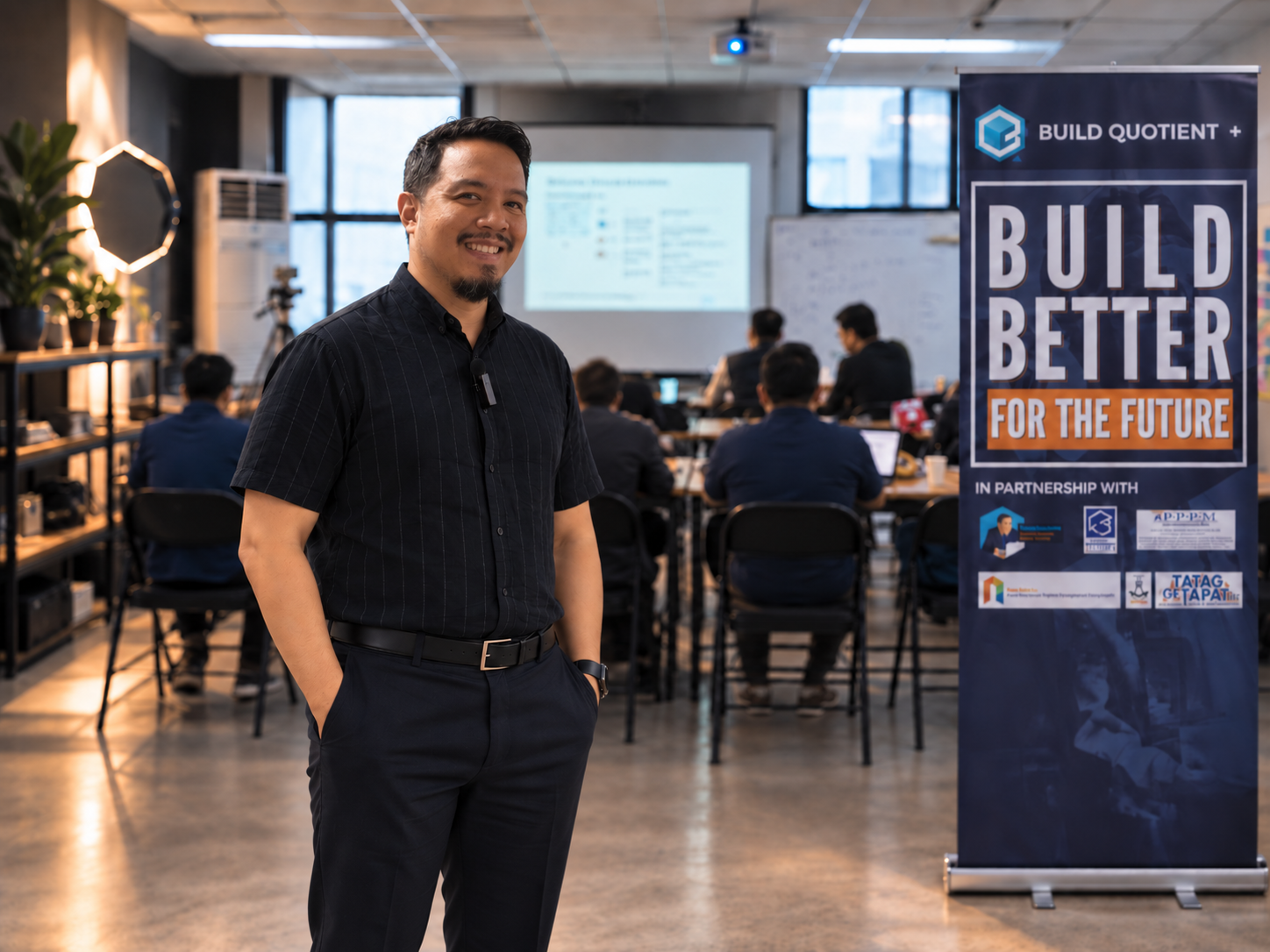
APA–CPMP 101 is taught from the perspective that project management does not happen in isolated departments. Scope decisions affect quality, cost, and time; field conditions affect productivity and safety; procurement affects schedule and cost; contracts affect authority and accountability; and leadership and governance determine whether the whole system works together.
The course therefore focuses on the relationships between the twelve competency areas—not merely their definitions—so participants can understand where their own role sits and how their decisions influence the wider project.
See construction decisions across the full project lifecycle, from project purpose and scope definition through field execution, controls, closeout, and knowledge leverage.
Understand when an issue belongs to scope, quality, safety, sustainability, cost, time, procurement, contracts, risk, governance, leadership—or several of them at once.
LEARNING DELIVERY
APA–CPMP 101 combines advance asynchronous access with live guided online learning, structured exercises, and applied EXECUTE activities so participants arrive at the synchronous sessions with the foundation needed for integrated discussion and application.
PROFESSIONAL ENROLLMENT
₱10,000
One-time enrollment
ENROLL NOW →ENROLLMENT TERMS & CONDITIONS
These terms apply to individual enrollment in APA–CPMP 101 unless a separate written organizational or enterprise agreement expressly provides otherwise.
Enrollment provides access to the published course content for 60 days from the participant’s enrollment or activation date, unless a different access period is expressly stated for a particular program or cohort.
At the end of the access period, course access may automatically expire. Participants are responsible for completing the required learning activities within the applicable access period.
Video lessons are provided for streaming access during the enrollment period and are not downloadable unless Build Quotient expressly states otherwise. Designated non-video learning materials may be downloaded for the enrolled participant’s personal professional-learning use.
Course videos, documents, worksheets, templates, graphics, assessments, and other learning materials remain the intellectual property of Build Quotient® or the applicable rights holder. They may not be reproduced, redistributed, uploaded, resold, shared with another user, or used to deliver training without prior written permission.
Participants must complete the required lessons, knowledge checks, EXECUTE activities, assessments, and other completion requirements prescribed for APA–CPMP 101.
Submission of an activity does not by itself establish professional competency. Where professional judgment or applied evidence is required, participants may be required to explain or defend the basis of their work.
Where live online participation forms part of the published program, participants are responsible for attending the scheduled sessions. For APA–CPMP 101, the published live online dates are November 11–12, 2026.
Advance access to asynchronous course content does not automatically substitute for required live participation where attendance or guided participation forms part of the completion requirements.
Certificates are issued only after successful completion of the applicable course requirements.
Any CPD credit, CMDF recognition, or other external recognition is subject to the requirements, rules, and continuing validity of the relevant accrediting, regulatory, professional, or institutional body. Course completion does not by itself constitute a separate occupational competency credential unless expressly stated.
Submitted work must substantially represent the participant’s own professional analysis and application. Plagiarism, falsification of evidence, misrepresentation of another person’s work, unauthorized collaboration, or unauthorized sharing of assessment answers may result in rejection of the submission, withholding of completion recognition, or removal from the program.
Individual enrollment is licensed for use by one registered participant only. Login credentials and course access may not be shared.
Build Quotient® course content, proprietary frameworks, templates, learning materials, and instructional resources may not be copied, reproduced, adapted, published, distributed, resold, sublicensed, or used to conduct another training program without written authorization.
Enrollment is confirmed only after successful payment or an approved organizational enrollment arrangement. Payment methods available at checkout may vary depending on the payment provider and transaction location.
Participants are responsible for any charges imposed by their own bank, card issuer, payment provider, foreign-exchange provider, or other third party that are not included in the published course fee.
Course enrollment is a commitment to a defined professional learning program. Refunds are not offered on the basis of dissatisfaction, change of mind, inability to attend, failure to complete the course, or a participant’s personal assessment that the course did not meet expectations.
A refund may be considered where Build Quotient is unable to deliver the enrolled program substantially as published, including circumstances such as:
Where a scheduled live session must be moved, Build Quotient may first offer a rescheduled session, replacement cohort, transfer, or other reasonable delivery arrangement. A schedule change by itself does not automatically create a refund entitlement where the program can still be substantially delivered.
Refund requests based solely on a participant’s change of circumstances, scheduling conflict, non-attendance, failure to complete required activities, dissatisfaction with teaching style, or decision not to continue are not refundable.
Any refund due because of non-delivery will be limited to the amount actually paid for the affected enrollment and will be processed in accordance with the original payment method and applicable payment-provider requirements.
Nothing in these Terms is intended to limit any consumer right or remedy that cannot lawfully be excluded under applicable Philippine law.
At Build Quotient’s discretion, a participant who cannot continue with the originally scheduled program may be permitted to transfer to a later available cohort of the same course. Transfers are subject to availability, applicable deadlines, and any administrative conditions published for the program.
A transfer is a discretionary enrollment accommodation and is not equivalent to a refund.
Enrollment information may be used to administer the course, provide access, communicate schedules and requirements, issue certificates, maintain learning and completion records, and provide applicable professional-development documentation in accordance with Build Quotient’s applicable privacy policy.
Bulk, enterprise, corporate, institutional, or sponsored enrollments may be governed by separate written commercial, billing, access, transfer, reporting, or delivery terms. Where such terms are formally agreed in writing, those provisions will apply to the extent they differ from these individual enrollment terms.
FREQUENTLY ASKED QUESTIONS
APA–CPMP 101 is the integrated foundation course for Construction Project Management Practice. It introduces all Four Core Performance Domains and Twelve Spheres of Competence: projects/programs/portfolios, the construction industry, scope, quality, safety, sustainability, cost, time and schedule, procurement and contracts, risk, governance, and leadership.
No. The course is specifically applied to construction projects and the built environment. The concepts are explained through construction lifecycle, field, contractual, stakeholder, resource, risk, governance, and project-delivery conditions.
They are grouped into four Core Performance Domains. CPD 01 establishes the project-management context; CPD 02 addresses field-operation and practical-completion constraints; CPD 03 addresses contractual performance controls; and CPD 04 addresses the risk, governance, and leadership catalysts that strengthen management excellence.
Yes. The course includes twelve guided EXECUTE outputs—one for each Sphere of Competence. These include project purpose and stakeholder maps, scope and quality bases, safety and sustainability controls, cost and schedule plans, procurement and contract planning, a risk register, a governance system, and a leadership and accountability response.
EXPERIENCE begins with practical project situations. EXPLORE builds the technical and management foundation. EXECUTE converts learning into structured professional outputs. EVOLVE occurs at the Core Performance Domain level so participants integrate each three-sphere cluster before moving into the next part of the management system.
No. APA–CPMP 101 establishes the management foundation behind project decisions and controls. Software may support those functions, but software training is not the purpose of this course. Deeper specialist capability belongs in succeeding APA–CPMP modules.
No. The course is useful both to practitioners already carrying project-management responsibility and to construction professionals preparing for broader responsibilities. It is particularly valuable for specialists who need to understand how their function connects to the whole project.
APA–CPMP 101 provides the common management foundation for progression into the succeeding APA–CPMP modules, where participants develop deeper capability in specific construction project-management domains and Spheres of Competence.
NEED ASSISTANCE?
Choose the most convenient way to reach Build Quotient.
ENROLLMENT NOW OPEN
Build the integrated foundation across project context, scope, field operations, cost, time, contracts, risk, governance, and leadership—then use that foundation to progress into deeper specialist capability across the APA–CPMP pathway.